
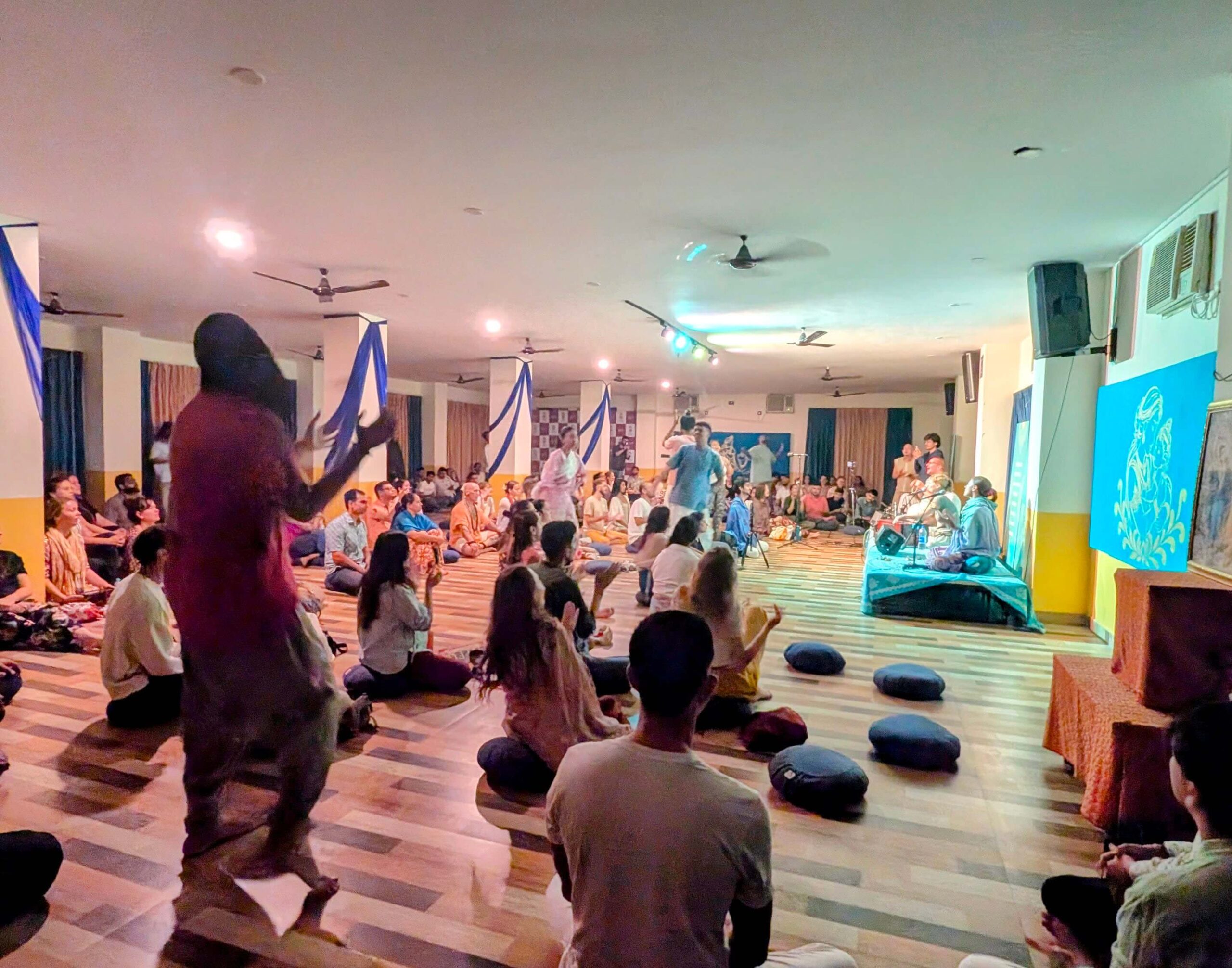
In one’s spiritual journey, one often comes across the terms Kirtan, Satsangs and Bhajans. While Kirtan, Bhajan, and Satsang are closely intertwined spiritual practices rooted in the Bhakti (devotional) and Jnana (wisdom) traditions of India, they differ distinctly in format, participation, and primary focus. Let’s go through what each of these spiritual practices are and use the right term correctly going forward.
1. Kirtan (The Dynamic Call-and-Response)
Kirtans have existed in India forever and have been gaining popularity amongst the young and conscious. The weekly kirtans by the devotees of the ISKCON temple at MVT Rishikesh are particularly popular.
- Structure: A lead singer chants a short, simple phrase or mantra (typically sacred names such as Hare Krishna, Om Namah Shivaya, or Radhe Shyam), and the group chants it back in unison.
- Energy & Tempo: Kirtan usually begins at an introspective, slow tempo and gradually accelerates into an energetic, ecstatic crescendo accompanied by instruments like the harmonium, mridanga, dholak, and kartals (cymbals).
- Objective: To bypass analytical thought through repetitive rhythmic sound vibration (nada), moving the energy directly into an open, meditative state of heart-centered devotion.
2. Bhajan (The Lyrical Devotional Song)
A Bhajan is a lyrical song which is also dedicated to a god or gods in devotion, but can be sung independenly of a group or audience. In fact, one can sing a Bhajan at a Kirtan! India has millions of Bhajans across languages, regions and dedicated to various gods. Some of the more popular bhajans are by devotional artists such as Anoop Jalota, Gulshan Kumar, Anuradha Paudwal, and others.
- Structure: A formal, lyrical composition with distinct stanzas (sthayi and antara), often drawing from the poetry of Bhakti saints like Mirabai, Kabir, Surdas, Tulsidas, or Purandara Dasa.
- Focus: While congregational bhajans exist, the focus is largely on lyrical meaning, melody (raga), and theological or narrative nuance (expressing longing, surrendered love, moral teachings, or allegories).
- Objective: Cultivating deep, reflective personal surrender and emotional resonance with the divine through poetry and music.
3. Satsang (The Communal Gathering for Truth)
- Structure: An umbrella gathering centered around exploring spiritual truth. It typically involves a talk or discourse (katha or pravachan) by a guru or realized practitioner, followed by philosophical questions and collective contemplation.
- Broad Context: A Satsang is not strictly a musical practice. However, a traditional Satsang session often incorporates chanting, silent meditation, and music—meaning a Kirtan or Bhajan often takes place as one component within a larger Satsang.
- Objective: Direct inquiry into the nature of the Self, dispelling ignorance through scripture and realized company, and grounding spiritual life in clarity and discernment (viveka).
To understand the difference even more clearly, imagine this hypothetical situation. A Satsang on the life and teachings of Krishna ends with an energetic kirtan underscored by popular bhakti bhajans!